

Basierend auf Intel´s AGP 3.0 Spezifikationen, hat Nvidia seine Quadro 4 Chips ein wenig aufpoliert. Die Chips 980 XGL, 580 XGL, 380 XGL und 280 NVS nutzen ab sofort AGP 8x Transfermodus. Wie Nvidia weiter berichtet, soll der neue AGP-Modus bis zu 40 Prozent mehr Performance (unter OpenGL) bieten können. Mehr Informationen können sie der Pressemitteilung von Nvidia entnehmen (Englisch)...
"SANTA CLARA, CA—NOVEMBER 12, 2002—NVIDIA Corporation (Nasdaq: NVDA), the worldwide leader in visual processing solutions, today announced that the Company has expanded its AGP 8X offerings with a range of new graphics solutions certified for professional workstation applications. Based on Intel’s AGP 3.0 specification, the new 8X graphics solutions—the NVIDIA Quadro®4 980 XGL, the NVIDIA Quadro4 580 XGL, the NVIDIA Quadro4 380 XGL, and the NVIDIA Quadro4 280 NVS—all deliver breakthrough application performance, graphics programmability, and multi-display productivity to further solidify NVIDIA’s professional graphics leadership.
The NVIDIA Quadro4 8X solutions extend the current NVIDIA Quadro4 family and deliver significant performance improvements. The NVIDIA Quadro4 980 XGL, for example, achieves up to 40% improvements in OpenGL workstation application performance as measured on the industry standard SPECviewperf 7 tests1.
“NVIDIA’s introduction of AGP 8X-based Quadro4 boards further attests to its commitment to the professional graphics market,” said Kara Yokley, manager of IDC’s Workstations and High Performance Systems research group. “The new boards offer increased price/performance and greater bandwidth, which will benefit professional users by helping to prevent bottlenecks for vertex and texture transfers from the host to the graphics processor.”
Today’s professional workstation applications achieve significant improvements due to the increased bandwidth of the AGP 8X graphics to host interface, improving from 1.0 to 2.1 gigabytes per second (GB/sec.). The increased data throughput between the processor and the graphics board keeps data hungry graphics processing units (GPUs) fed with the data necessary to render high frame rate, high fidelity, real-time graphics.
“NVIDIA is architecting graphics processors to satisfy the performance and scalability needs of today and tomorrow,” said Dan Vivoli, vice president of marketing at NVIDIA. “By making available greater AGP bandwidth and increasingly advanced hardware, NVIDIA is breaking through all the barriers to allow application developers and creative professionals to innovate freely.”
SanDisk erweitert sein Speicherportfolio um die Guardian Series, die speziell für Kameras mit kontinuierlicher Aufzeichnung entwickelt wurde. Die neuen Speicherkarten...
KIOXIA hat mit der LD4-Serie seine ersten SSDs im E1.L-Formfaktor auf Basis der achten Generation des BiCS FLASH QLC vorgestellt....
devolo bringt mit dem WiFi 7 BE9300 einen neuen Tri-Band-Router auf den Markt, der sich als Ethernet-Router für Glasfaseranschlüsse, Access...
BenQ erweitert seine MOBIUZ-Serie um den EX271QMZ. Der 26,5 Zoll große Gaming-Monitor setzt auf ein QD-OLED-Panel der dritten Generation mit...
Mit der E100 1 TB SSD hält Crucial eine preisorientierte NVMe-SSD mit PCIe 4.0 x4 bereit. Das M.2-2280-Laufwerk soll laut...
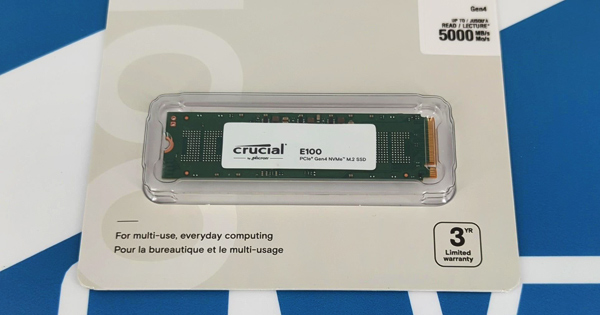
Die E100-SSD von Crucial basiert auf einem PCIe Gen4 Interface und QLC-Flashspeicher von Micron. Die Serie zielt auf Ein- und Umsteiger in die SSD-Welt ab. Wir haben uns das 1-TB-Modell im Test angesehen.
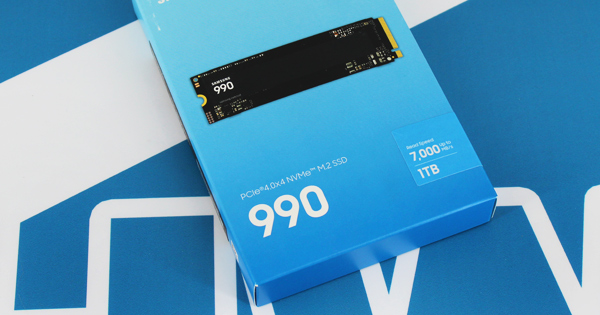
Mit der SSD-990-Familie stellt Samsung eine neue Serie von SSDs für Einsteiger vor. Wie sich die Kombination aus PCI Express Gen4 und QLC-Flashspeicher in der Praxis schlägt, klären wir am 1-TB-Modell.